What runs in the loop
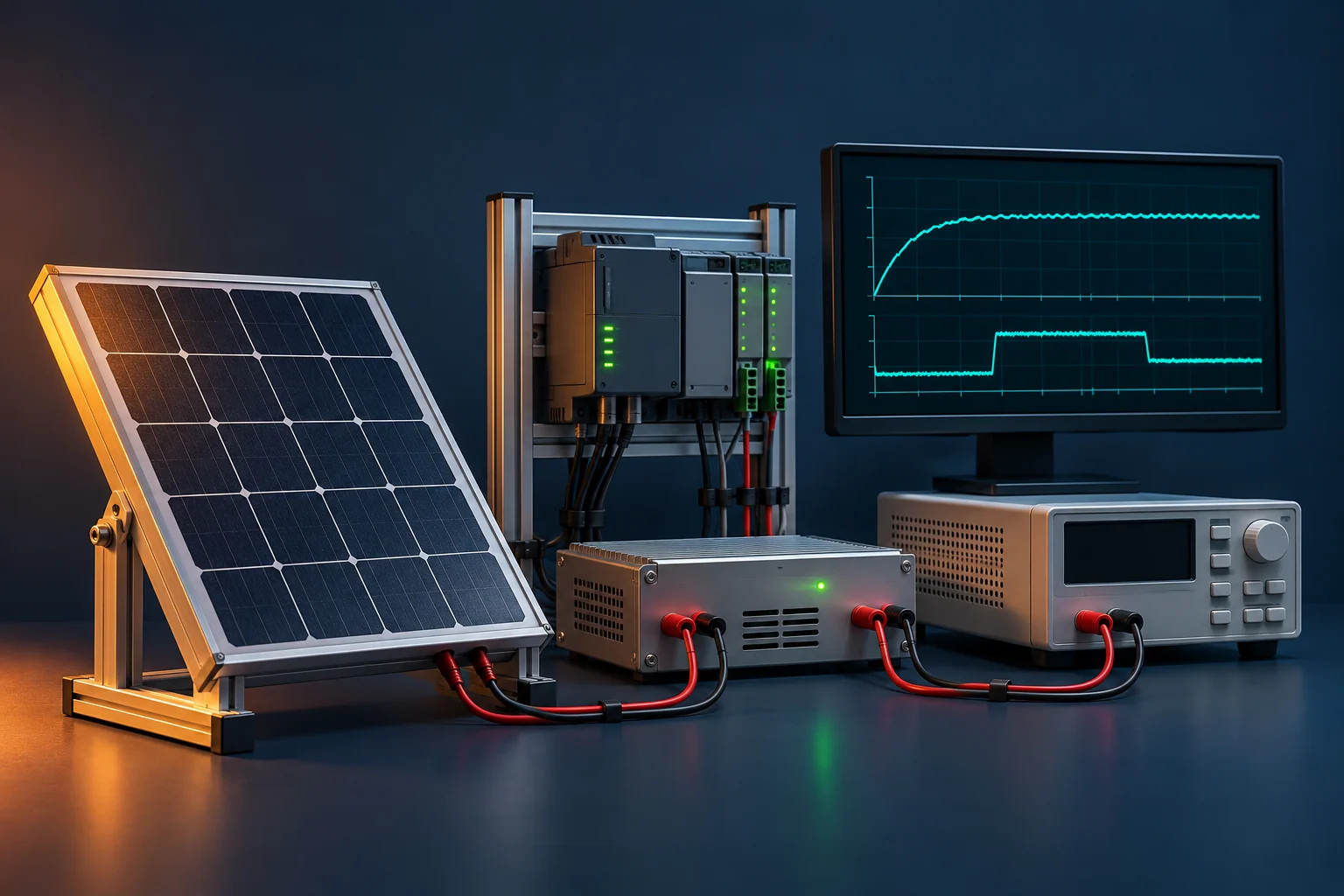
A real-time simulator models the electrical environment and sends signals to connected equipment. The simulator reads the equipment’s measured response and uses it in the next step of the model. This exchange lets students study the interaction between a device and its wider system.
An experiment students can reason through
- Set a baseline. Record the selected operating condition and choose a quantity to observe, such as voltage, current, or power.
- Change one input. Modify renewable generation in the model and keep the other inputs fixed.
- Compare responses. Identify where measured behaviour agrees with the prediction and where a model assumption could explain a difference.
Start with one question
If renewable generation falls while demand stays fixed, what evidence would show where the replacement power came from? Decide what to measure before running the scenario.
A teaching-bench concept